


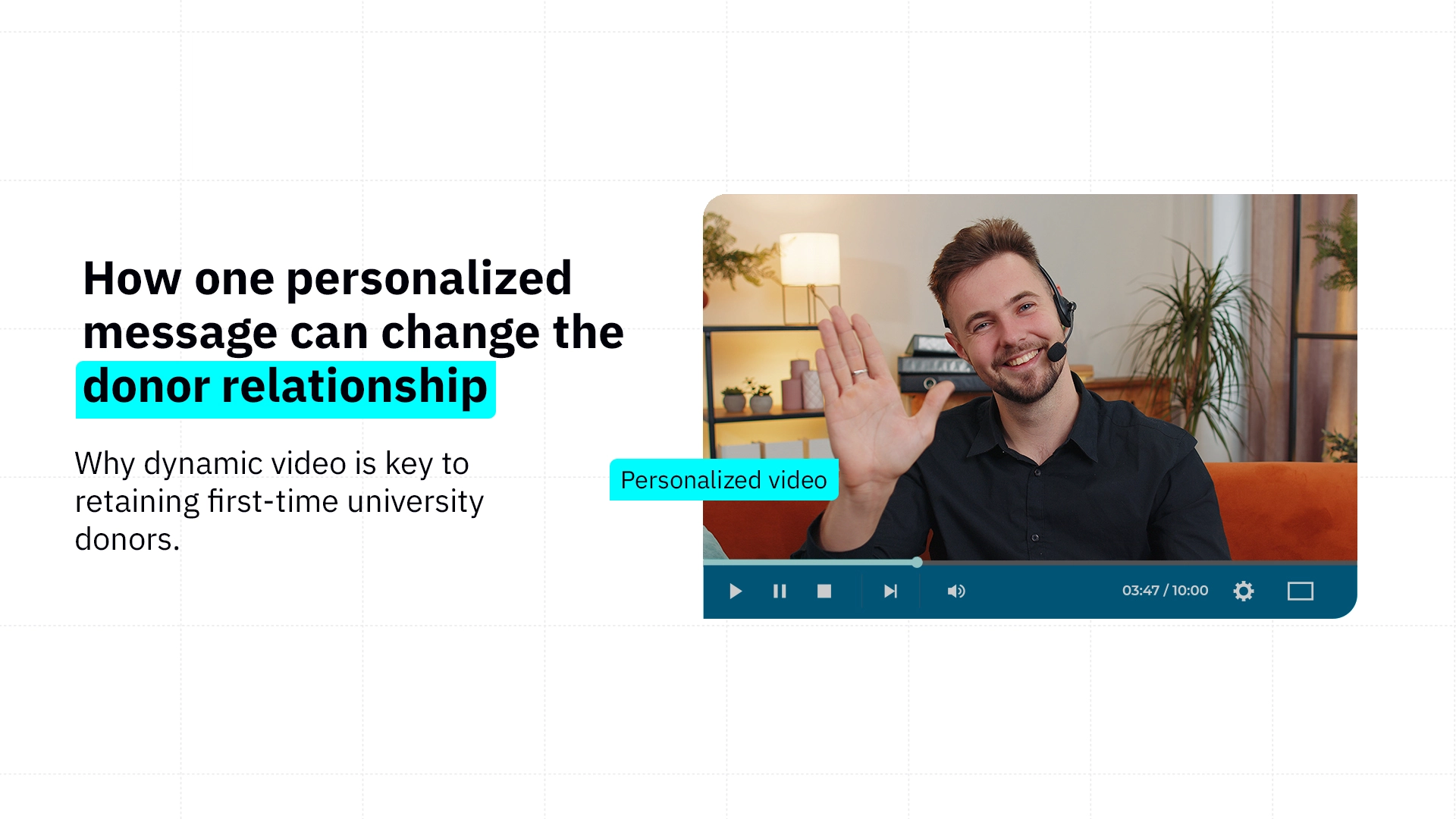
06 Oct How one personalized message can change the donor relationship
One of the most expensive challenges in university fundraising often begins with a successful campaign.
A new donor makes an initial contribution, receives a standard acknowledgment, and then quietly disappears before the next appeal.
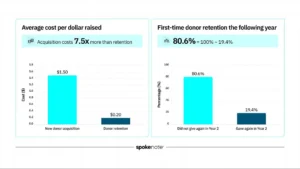
According to AFP Global, only 18.9% of first-time donors gave again in 2025. That means that for every 100 new donors acquired through an annual fund campaign, roughly 80 may not return for the next one.
The financial impact can add up quickly. Advancement teams invest significant time and money in bringing new supporters into the institution, only to lose much of that value before the relationship has had time to develop.
Most teams already know their retention numbers. The bigger challenge is turning that knowledge into a stewardship experience that creates enough connection to inspire a second gift. A traditional sequence of an acknowledgment letter, a tax receipt, and the next campaign appeal may complete the necessary steps without doing enough to strengthen the relationship.
The process confirms that the donation was received, but it may not make the donor feel known or appreciated.
Personalized video gives advancement teams a more human way to strengthen that relationship. This playbook explores how institutions can use it throughout the donor journey, from the first thank-you to impact updates, annual appeals, and lapsed donor reactivation.
The donor retention equation every advancement team should know

Before looking at the tactics, it is worth understanding the economics behind donor retention.
According to the Nonprofit Learning Lab & the ASU Lodestar Center, it can cost up to $1.50 to raise $1 from new donors but $0.20 or less from existing donors. Based on those figures, acquisition costs 7.5 times more than retention.
A first-time donor who makes a second gift brings more than another contribution. That donor also reduces the amount the institution must spend to replace them with someone new.
The value grows over time.
A donor retained for five years has an established giving history and a longer-standing relationship with the institution, creating more opportunities for that relationship to deepen over time.
Many major gift donors begin as annual fund donors. The future principal-gift pipeline may therefore begin with something as simple as how the institution responds to a $50 contribution.
If the acknowledgment feels thoughtful and personal, the donor has a reason to remain connected. If the experience feels routine, the relationship may never develop beyond the first transaction.
That is why the second-gift rate deserves close attention. It is one of the clearest early signs that an initial contribution is beginning to grow into a longer donor relationship.
Why standard stewardship often falls short
For many first-time donors, the stewardship process follows a familiar pattern.
The institution processes the gift, sends an automated acknowledgment within 24 to 48 hours, issues a tax receipt, and adds the donor to the next campaign list.
Operationally, everything has worked. Emotionally, very little may have happened.
An email that says, “Dear [First Name], thank you for your generous gift of $[Amount] to [Institution Name],” provides the expected information. It confirms the gift and expresses appreciation.
However, it does not necessarily feel personal.
The message may not show that anyone at the institution understands why the donor contributed, what they chose to support, or why their involvement matters beyond the dollar amount.
That distinction is especially important after a first gift.
At this stage, the donor is still forming an impression of the institution as a fundraising relationship. The quality of the acknowledgment can influence whether they feel connected enough to contribute again.
Donors who feel genuinely appreciated are more likely to make another gift. The important word is “feel.”
Meaningful appreciation requires the donor to actively feel the gratitude conveyed in the outreach. There is a meaningful difference between saying, “We sent the thank you,” and hearing a donor say, “I felt thanked.”
The space between those two outcomes is where many first-time donor relationships begin to fade.
Why video creates a stronger donor connection
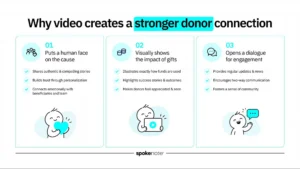
A personalized video thank-you creates a very different experience from a standard acknowledgment.
It allows the donor to see and hear a real person from the institution. It brings tone, expression, and warmth into the message. It can also reflect the specific context of the donor’s contribution, making the communication feel more relevant and sincere.
A real person behind the message
Gratitude often feels more meaningful when it comes directly from another person.
A gift officer, dean, faculty member, student, or program leader can address the donor by name and thank them in a way that feels immediate and genuine.
Hearing directly from someone who represents the people and work behind the university can make the message feel more personal than communication from an institutional address alone.
That human presence can preserve a sense of genuine connection, even when the campaign is being delivered at scale.
A clear sign that the gift was noticed
Personalized video can reference the fund or program the donor supported, the amount they gave, their graduation year, or another relevant connection to the institution.
Those details show that the message reflects the donor’s actual relationship with the university.
Instead of receiving a broad thank you, the donor receives a clear signal that someone noticed their contribution and understood where it was directed.
Effective personalization goes beyond a first name by recognizing the context surrounding the gift.
An invitation to continue the conversation
Video also allows the sender to invite further engagement in a natural way.
A message might close with:
“If you would ever like to hear more about how your gift is being used, please feel free to reach out to me directly.”
Most donors may not respond immediately. Even so, the invitation changes the tone of the interaction.
That invitation turns a simple donation confirmation into an opening for continued conversation.
The value of personalized video lies in the experience it creates for the donor. A timely message from a real person can make the acknowledgment feel more relevant, memorable, and connected to the relationship the institution hopes to build.
A smarter calendar for stronger donor retention
The strongest personalized video programs integrate video into a structured stewardship calendar built around different stages of the donor relationship. Each message should serve a clear purpose and arrive at a point when the donor is most likely to value it.
| Timeline | Milestone | Video Content Focus | Objective |
|---|---|---|---|
| First 48 Hours | Initial Gift | A 60- to 90-second genuine thank-you with no ask. | Make the donor feel seen and appreciated immediately. |
| 6 Months | Impact Update | A specific story or outcome showing what the gift funded. | Turn acknowledgment into tangible evidence of impact. |
| Annual Appeal | Next Campaign | A personalized ask referencing previous support. | Invite a second gift naturally based on an established relationship. |
| Post-Lapse | Reactivation | A warm message acknowledging the gap and sharing updates. | Reopen the relationship without applying immediate pressure. |
Make the first 48 hours count
The first 48 hours after a donation may be one of the most valuable stewardship windows in the donor relationship.
The donor has just taken action, and their connection to the institution is still fresh. A timely, personal response can show that their contribution was noticed and appreciated.
A 60- to 90-second video from a gift officer, major gifts officer, dean, or another recognizable institutional representative can make that first acknowledgment feel sincere rather than automatic.
The message should remain simple:
- Address the donor by name
- Reference the gift or fund they supported
- Express genuine gratitude
- Avoid making another request
Keep the first message focused entirely on gratitude, without introducing the next campaign or another giving opportunity.
The purpose is to let the donor know that their contribution was received by a real person who is genuinely grateful for it.
Timeliness matters at this stage of the relationship. Delivering the message while the gift is still fresh helps connect the donor’s action with a direct human response from the institution.
The influence on second-gift behavior can then be measured over the following 12 months.
Six months after the gift: The impact update
Before asking the donor to contribute again, show them what their first gift helped make possible.
Many donors want to understand whether their support produced a meaningful result, even if they never ask the question directly.
A personalized video from a program director, faculty member, student, or another person connected to the funded area can help answer that question:
“Did my gift actually make a difference?”
The strongest impact updates focus on one relevant story, outcome, or example of progress rather than trying to summarize everything the institution has accomplished.
A student might explain how a scholarship supported their education. A faculty member might share how donor funding advanced a program. A program director might show how contributions helped address a particular need.
That level of detail gives the donor something tangible to connect with and helps demonstrate that their support had a clear purpose.
The impact update turns stewardship from acknowledgment into evidence.
During the annual appeal: The re-engagement ask
When the next annual appeal arrives, the donor should not feel as though the relationship is beginning again from the start.
A personalized video can make the request feel like a natural continuation of the stewardship they have already received.
For selected donor groups, such as alumni above a certain giving threshold, supporters of a particular fund, or donors with a history connected to a specific program, video can accompany or replace the standard appeal letter.
The message can acknowledge their previous support, provide relevant context, and explain why the next opportunity matters.
The results from GLASA show the potential of more personalized outreach. For the sports and fitness nonprofit, personalized donor outreach through Spokenote generated a 173% lift in engagement.
Outreach can become more relevant when it recognizes the donor’s previous involvement and connects the next request to an existing relationship. Instead of approaching every donor with the same broad campaign message, advancement teams can use what they already know about a supporter to create a more relevant invitation to continue giving.
After a donor lapses: The reactivation message
A donor who contributed in a previous year already has a history with the institution. They know the organization, have chosen to support it before, and may still be open to reconnecting even after a period of inactivity.
That makes lapsed donors an important audience for thoughtful re-engagement.
A personalized reactivation video should acknowledge the donor’s previous support and recognize the gap without making them feel guilty.
The message can remind them that their contribution mattered, share what has happened since, and invite them to reconnect with the institution.
The tone should feel warm and respectful, with the immediate focus on reopening the relationship and giving the donor a relevant reason to pay attention again. Another gift may follow, but the first priority is renewed connection.
Personalized video can create a more personal and emotionally distinct reactivation experience than a standard reminder.
A message from a real person can acknowledge the donor’s history with the institution and create a more natural opening for renewed engagement.
Start here to improve donor retention
The first-gift thank-you is the most practical place to begin.
Start with a clearly defined group, such as first-time donors above a chosen gift threshold. Record a 60- to 90-second message from a named gift officer and send it within 48 hours of receiving the donation.
The production does not need to be elaborate.
A well-lit office, clear audio, and sincere delivery can be enough to create an effective message. The production should support the message rather than overshadow it. What matters most is helping the donor feel that someone noticed and appreciated their contribution.
Spokenote’s data-merge capability can personalize each delivery with information such as the donor’s name, gift amount, and fund designation.
This allows one campaign to feel individualized without asking the gift officer to record hundreds of separate videos.
Once the program is live, compare the second-gift rate for donors who received a personalized video with the rate for those who received the standard acknowledgment process.
That comparison gives the advancement team a clear way to understand whether the video experience is influencing future donor behavior.
As the program develops, the institution can gradually add:
- A six-month impact update
- Personalized video within the next annual appeal
- A reactivation sequence for lapsed donors
- Engagement data to guide future stewardship
Start by improving the moments most likely to shape the donor relationship, then expand the program as the workflow and results become clearer.
Final takeaway
Processing the contribution correctly is only the beginning of the first-time donor relationship. Whether that relationship continues can depend on what happens next and whether the donor feels genuinely recognized, appreciated, and connected to the institution.
An acknowledgment letter can confirm the gift. A tax receipt can complete the administrative process. A message from a real person can help the donor feel that their contribution was genuinely noticed.
Personalized video gives university advancement teams a practical way to create that experience without making stewardship impossible to scale.
Begin with the first thank-you. Track the second-gift rate. Then expand the program as the results and workflow become clearer.
FAQs
- What is donor stewardship?
Donor stewardship is everything an organization does after a gift to thank the donor, show the impact of their support, and keep the relationship going. Good stewardship is what turns a first gift into a second one.
- How quickly should you thank a first-time donor?
Within 48 hours. The gift is still fresh, so a fast, personal thank-you links the donor’s action to a real human response. Keep this first message about gratitude only, with no new ask.
- How long should a donor thank-you video be?
Aim for 60 to 90 seconds. That is long enough to use the donor’s name, mention the fund they supported, and say a sincere thank you, and short enough to watch on a phone.
- What is the average first-time donor retention rate?
In 2025, only 18.9% of first-time donors gave again, compared with 59.3% of repeat donors, according to the Fundraising Effectiveness Project. A practical goal is to beat your own rate from last year.
- Does a gift officer need to record a separate video for every donor?
No. With personalized video, a gift officer records once, and details such as the donor’s name, gift amount and fund are added for each person. One campaign can feel one-to-one without hundreds of recordings.[/vc_column_text][/vc_column][/vc_row]