



06 Nov Between decision and deposit: reaching admitted students
An acceptance letter answers one question for an admitted student and opens a lot of new ones. Their family usually has questions of their own. The weeks between the admit decision and the deposit are when those questions get asked, and when the student decides whether this school knows who they are.
A counselor’s time is limited, and a family’s questions are not. Most of that time goes, reasonably, to top recruits and to the admits who are already close to saying yes. The admit in the middle, interested but undecided, rarely gets a call. What that student does get is a run of reminders about forms and the deposit deadline. Each one is useful on its own. Together they tell the student that the only time they hear from the school is when it wants something.
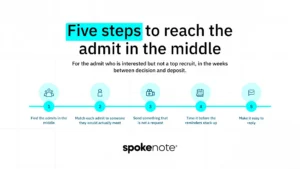
This playbook is for that student. It covers five steps an enrollment team can run in the weeks between decision and deposit, so the wavering admit hears from someone on campus they would actually meet.

Step 1: Find the admits in the middle
Start with the list your counselors are not going to get to. These are admits who showed real interest, through a campus visit or a question about their program, but who are not top recruits and have not yet deposited. In most offices, this group is too large for a counselor to call each student, which is exactly why it gets skipped.
Who in this group should hear from campus, and when, is a sorting question. That part can run in the back office with help from AI, based on what each student has already done. The sorting can be automated. The message the student opens should come from a person.
Step 2: Match each admit to someone they would actually meet
For the admit in the middle, who sends the message matters as much as what it says. A student deciding between schools is trying to picture their first semester, and the people in that picture are the ones worth hearing from, like a professor who teaches in their program or a current student in the same major.
A message from the enrollment inbox tells the student the school has their email address. A message from someone they could meet on campus next fall tells them there is a person at the other end. Keep the match simple. Pair each program with a faculty member and, where possible, a current student in the same major. That gives undecided admits someone relevant to hear from without counselors having to contact every student individually.
The sender does not need to be senior. A short note from someone the student might share a classroom with can mean more to them than a letter from the president.
Step 3: Send something that is not a request
Look at what this group has received so far and sort it by purpose. If nearly every message asks the student to do something, the next one should not. The most useful message answers a question the student or their family is likely to have. A professor can describe what the first year in the program looks like. A current student can talk about how they made the same decision a year or two ago.
The deposit deadline still matters, and the reminder still needs to go out. It just should not be the only message in the inbox.
Step 4: Time it before the reminders stack up
The weeks between decision and deposit are not all equal. A message that arrives early, while the student is still comparing offers, has room to shape how they see the school. A message that arrives alongside the third deadline reminder reads like part of the push. The average applicant now has plenty to compare. Common App’s 2025–26 end-of-season report found applicants submitted 7.06 applications each on average to its member colleges, up from 6.79 the year before.
Plan the personal message for the early part of the window, then let the reminders follow. Use the sorting from Step 1 to see who should hear from campus each week, rather than leaving undecided admits until the final days before the deposit deadline.
Step 5: Make it easy to reply
A personal message works best when it opens a door. End each one with a simple way to respond, either a reply that goes straight to the sender or the name of a person the family can ask. A parent with a question about housing, or a student unsure about their program, should know exactly who to write to.
Not every admit will reply, and that is fine. What matters is that the student and their family know there is someone at the school they can ask, which is often the thing the wavering admit is missing.
What this looks like, and what it does not change
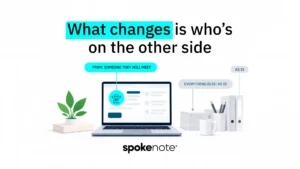
In one engineering school’s admitted-student campaign, every admitted student heard from a person, and dozens signaled deposit intent. That is one school’s experience, not a promise of deposits or enrollment for another.
It is worth being plain about what this playbook leaves alone. It does not raise open rates or fix email deliverability, and it cannot clean up a tired contact list or solve existing IT problems. What it can change is who the student hears from during those weeks of uncertainty, and whether the message gives them a reason to feel someone at the school is paying attention.
Frequently asked questions
When should admitted students hear from someone other than admissions?
Early in the window between the admit decision and the deposit, while the student is still comparing offers. A personal message that arrives before the deadline reminders pile up has the most room to shape how the student sees the school.
Who should send messages to admitted students?
Someone the student could meet on campus, such as a professor in their program or a current student in their major. The sender does not need to be senior. What matters is that the student can picture that person in their first semester.
Can AI personalize admitted-student outreach?
AI can help decide who should hear from the school and when. The message the student actually opens should come from a person. AI in the back office, a human in the frame.
Continue the conversation at AMA Higher Ed
Where AI can support enrollment outreach and where a person should take over is part of the conversation at the AMA Symposium for the Marketing of Higher Education. Bart Caylor of Caylor Solutions and Ethan Braden of Texas A&M University will explore that line with Conrad Edwards, Chief Operating Officer at Spokenote, moderating, in “AI in the Process, Human in the Inbox: Winning Enrollment Trust in a Synthetic World.” The session is part of the Innovation Showcase on Monday, November 9 at 2:40 PM MT in Summit 2-3.
Afterward, stop by Spokenote’s booth, 533, to continue the conversation.