

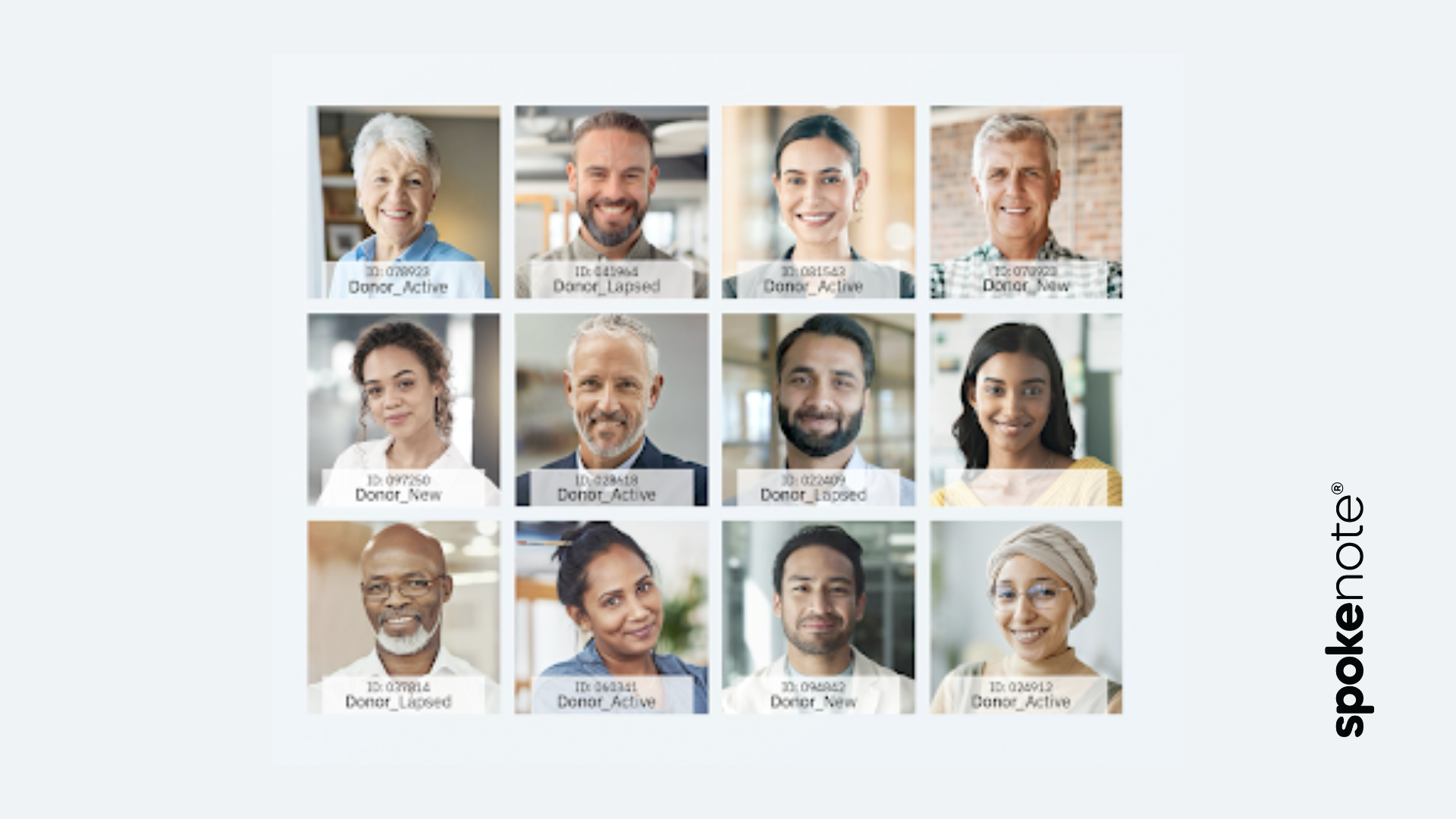
27 Feb The Personalization Illusion: Why Your {First_Name} Strategy is Killing Your Connection
We need to have a “who’s gonna say that uncomfortable thing” moment about modern marketing. It’s OK, we’ll say it.
For the last decade, we’ve been sold a beautiful lie: that “personalization” is the key to the kingdom. We were promised that if we just bought enough SaaS tools, integrated enough APIs, and mapped enough customer journeys, we would finally achieve that holy grail of “1-to-1 communication at scale.”
In many ways, we did. We solved the logistics, we figured out how to hit “send” to 50,000 people at once. But in our rush to automate delivery, we accidentally optimized the humanity right out of the message. Did we just prioritize efficiency over empathy?
The result? We have scale without substance, and a whole lot of soulless noise.
Welcome to the Personalization Illusion. It’s the formulaic communication where an email says, “Hi [First_Name], I noticed you’re a leader at [Company_Name]…” It looks modern. It looks automated. But your audience has developed a sixth sense for it. To them, it’s not a personal touch; it’s a “trust tax” you’re asking them to pay.
Today, we are diving in to the first of our Three Keys to Dynamic Video Success: Audience Segmentation. But we aren’t talking about the boring demographics in your CRM. We’re talking about how to bridge the “Empathy Gap” by moving from knowing someone’s name to knowing their moment.
1. The Science of “Compassion Fade”: Why Big Data Leads to Small Impact
Most organizations think segmentation is a data problem. Why is a generic message so damaging? It’s not just “boring” – it’s counterproductive to how the brain processes information and how we feel empathy. It’s “icky”, to use a technical term.
When we communicate without segmentation, we are forced to speak in “The Aggregate.” We talk about the 10,000 students we serve, the 5,000 trees we planted, or the “entire community” we support. We do this because we want to show scale.
But according to groundbreaking research on Compassion Fade, scale is the enemy of empathy.
The research by Paul Slovic and Daniel Västfjäll proves that our “willingness to help” and our emotional response are greatest when we focus on a single, identifiable individual. As soon as you add a second person to the story, compassion begins to fade. By the time you are talking about “thousands,” the brain has processed the information as a cold statistic, not a human reality.
This is why segmentation is your most powerful psychological tool.
If you don’t segment, you are stuck in the “Mass Trap.” You have to send one video that tries to represent your entire mission to everyone. In doing so, you lose the “Power of One.” You talk about the crowd, and the crowd is where empathy goes to die.
Segmentation allows you to stop talking about the “10,000” and start talking about the “One.” It allows you to match a specific donor to a specific story, or a specific student to a specific outcome. You aren’t just “personalizing” a name; you are protecting the empathy of the interaction by keeping the focus small enough for the human heart to handle.
2. Passive vs. Active Personalization: The New Game
To win in the modern landscape, you have to understand the difference between these two strategies.
The Old Game: Passive Personalization
This is the land of superficial swaps. It’s cosmetic. It’s lipstick on a pig, a logo swap, a first-name overlay on a video, or a quick merge field.
- The Ugly Number: 53% of customers report having negative experiences with this kind of surface-level targeting.
- The Reason: People don’t want to be “targeted”; they want to be “seen.” Seeing your name spelled correctly in a video that has nothing to do with your life feels like a magic trick – and nobody likes being fooled.
The New Game: Active Personalization
Active personalization doesn’t just label the viewer; it constructs the experience based on their context. It uses data to change the actual story being told.
- The Approach: Instead of one video with 10,000 names, it’s 10 strategic “moments” delivered to 10 specific cohorts.
- The Payoff: The content adapts to the context. By focusing on a specific cohort, you can tell a “Power of One” story that avoids Compassion Fade and triggers real action.
3. The “Jobs-to-be-Done” Lens: Finding the Moment
If you want to move into Active Personalization, you have to stop segmenting by who people are (demographics) and start segmenting by what they are trying to accomplish (context).
This is the Jobs-to-be-Done (JTBD) framework. The theory suggests that customers and donors don’t just buy products or give money; they “hire” an organization to help them make progress in a specific area of their lives.
Think about the context of your own audience:
- In Higher Ed: An admitted nursing student doesn’t “hire” your university for a general education. They hire you to help them become a nurse. They shouldn’t get a “Welcome to Campus” video featuring the football stadium. They should get a video featuring the simulation lab, a nursing-specific faculty welcome, and a financial aid closer relevant to their state.
- In Nonprofits: A first-time $25 donor is “hiring” you to help them feel like they made a difference in one life. A $10,000 major donor is “hiring” you to be a steward of a legacy.
Segmentation is simply the process of identifying these “Jobs” and grouping your audience so you can speak to the “One” job they care about.
4. Behavioral and Zero-Party Data: The Ultimate Respect
We are living in a post-cookie world, right? Aren’t we? Yes? No? Hello? Whatever. People are protective of their data – unless that data makes their lives better. This is where Zero-Party Data comes in.
Zero-party data is information that a customer proactively and willingly shares with you. It’s the “Ask, Don’t Guess” strategy.
Imagine a donor tells you through a simple survey that they are most interested in your “Sustainability” initiatives. If your next video communication is a personalized update specifically about your solar panel project, that isn’t creepy – it’s responsive. It shows that you were actually listening.
Combine this with Behavioral Segmentation (tracking what they do – like clicking a specific link or attending a certain event) and you have a powerhouse engine for relevance. You aren’t guessing what they want; you are responding to what they do.
5. The “Spreadsheet” Reality: How to Scale Without a Tech Army
I can hear the objection already: “This sounds great for a company with a 50-person marketing team. I have a spreadsheet and a part-time intern.”
Here is the secret: personalization doesn’t require infinite versions at the individual level, it requires clarity about the moments that matter most.
You don’t need a complex “AI video generator” to do this. You need Cohort Compression. You only need to identify 3 to 5 high-value moments in your funnel where a human touch would change the outcome.
The Low-Tech “Cheat Sheet” to Active Personalization:
If you have an Excel sheet, you can do this. Create three columns to map your strategy:
| The Audience (Cohort) | The “Job” (Context) | The Video Module (The Content) |
| Admitted Nursing Students | “Will I pass my boards here?” | 30-second clip of the Sim Lab + Faculty welcome. |
| Lapsed Donors | “Do they still need my help?” | “We miss you” + A story of one family helped. |
| New Inquirers | “Is this place right for me?” | A student-led tour of their specific major area. |
By mapping specific video “modules” to these cohorts, you aren’t filming 1,000 different videos. You’re filming three specific segments that “assemble” into a highly relevant experience for thousands of people.
Yes, we’re oversimplifying, and yes, we can help you create the right moment for the right person at the right stage, whether that’s across cohorts of 10 or 10,000.
6. The Bottom Line: Relevance is Revenue
This isn’t just about “feeling good.” It’s about “the maffs”.
McKinsey research shows that organizations that excel at this type of active, data-driven personalization drive a 10% to 30% lift in revenue and retention.
When you stop treating your audience like a monolith and start treating them like a collection of human stories, the results follow. You stop fighting for “attention” (which is expensive) and you start earning “engagement” (which is priceless).
The Personalization Illusion is over. People can smell the automation from a mile away. It’s time to stop sending the exact same message to everyone and start creating distinct moments for someone. Because when the content adapts to the context, trust increases – and audiences reward relevance – and you can make “Yes” inevitable.
Next up in our series: Now that you know who you are talking to, how do you actually produce the content? We’ll dive into Key #2: Coherent Video Strategy, where we’ll introduce the “Fresh Eyes” approach to your content, and how to showcase a symphony of faces.